
You followed the recipe, the cake rose beautifully in the oven, and then it sank in the middle. If you have ever asked yourself, “Why did my cake sink?”, you are not alone. It happens to every baker, and the good news is that a sunken cake almost always has a simple cause. Once you know it, it is easy to fix.
Watch: Why Did My Cake Sink? in 30 Seconds
In this article
- 1. Opening the Oven Door Too Early
- 2. The Cake Was Underbaked
- 3. Too Much Baking Powder or Baking Soda
- 4. The Oven Temperature Is Wrong
- 5. The Wrong Tin Size
- 6. Inaccurate Measuring
- 7. Overmixing the Batter
- Can You Save a Sunken Cake?
- Why Did My Cake Sink? Quick Troubleshooting Table
- How to Tell When a Cake Is Done
- Checklist to Prevent a Sunken Cake
- Frequently Asked Questions
- Bake With Confidence
1. Opening the Oven Door Too Early
A rush of cold air can make a cake collapse before its structure has set. Keep the door closed for at least the first two-thirds of the baking time, and use the oven light to check on it instead.
2. The Cake Was Underbaked
If the centre is not fully cooked, it cannot hold itself up as it cools. Always check with a skewer: it should come out clean or with a few dry crumbs, and the top should spring back when gently pressed.
3. Too Much Baking Powder or Baking Soda
More raising agent does not mean a taller cake. Too much makes the cake rise very quickly, and then the bubbles collapse. Measure leaveners carefully with proper measuring spoons, levelled off. Learn more in our guide to baking soda vs baking powder.
4. The Oven Temperature Is Wrong
Many ovens run hotter or cooler than the dial says. Too cool, and the cake never sets properly; too hot, and the outside sets before the middle has finished rising. An inexpensive oven thermometer is one of the best tools you can buy. See our oven temperature chart.
5. The Wrong Tin Size
A tin that is too small makes the batter very deep, so the centre struggles to bake through. Use the tin size given in the recipe, and fill tins no more than two-thirds full.
6. Inaccurate Measuring
Too much liquid, sugar or butter weakens the cake’s structure. Weighing ingredients with a kitchen scale is the most reliable way to get consistent results.
7. Overmixing the Batter
Beating the batter too long after adding the flour, or creaming for far too long, can trap too much air. The cake rises high and then falls. Mix only until the flour disappears.
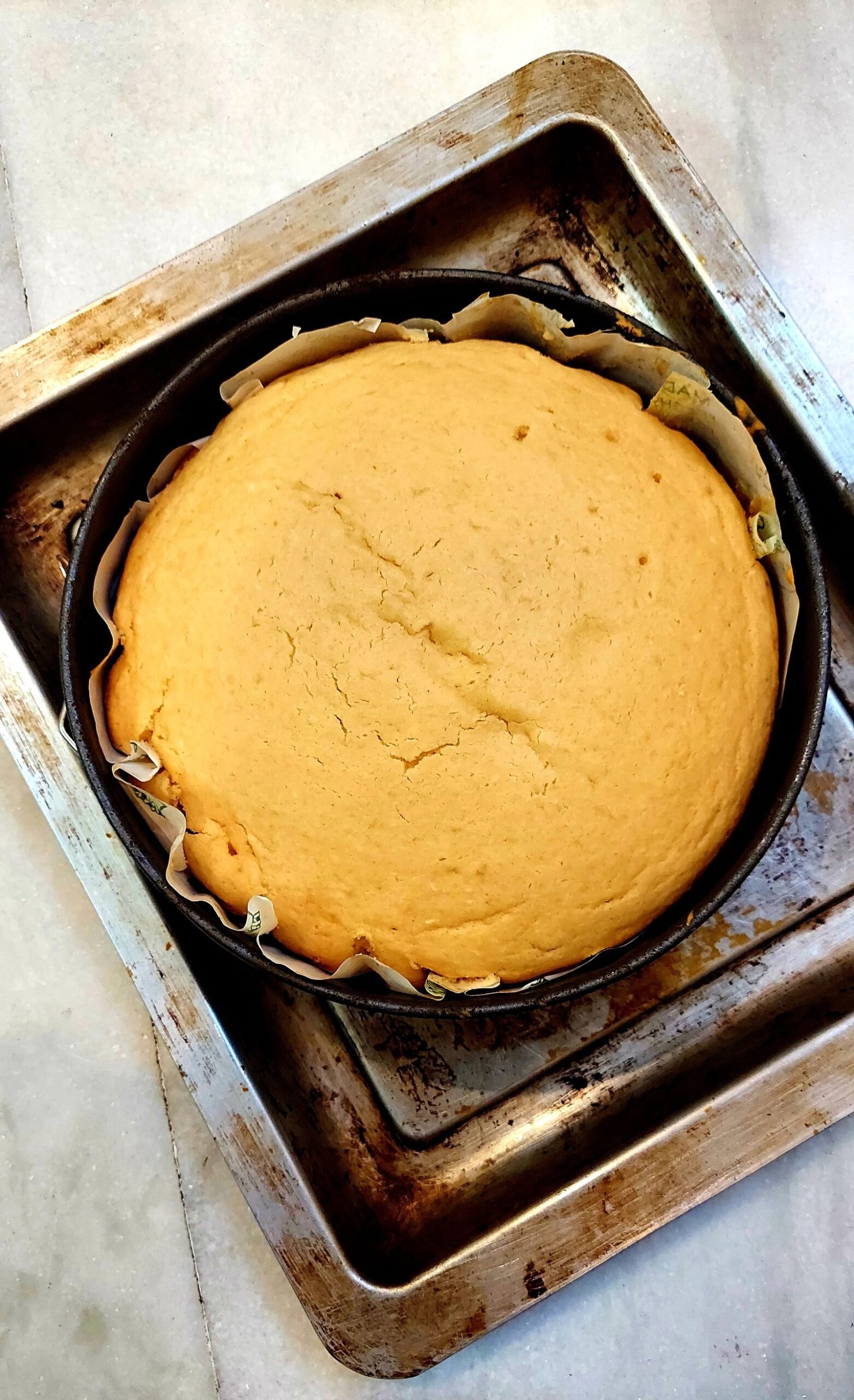
Can You Save a Sunken Cake?
- Fill the dip. Fill the centre with frosting, whipped cream or fresh fruit and no one will know.
- Trim and stack. Level the top, then layer it with frosting.
- Make a trifle or cake pops. Crumble the cake and turn it into a new dessert.
Why Did My Cake Sink? Quick Troubleshooting Table
Use this table to match what you see with the most likely cause:
| What you see | Likely cause | Fix |
|---|---|---|
| Sinks in the middle soon after baking | Underbaked centre | Bake a few minutes longer and test with a skewer |
| Rises very high, then collapses | Too much baking powder or soda | Measure raising agents with level spoons |
| Dips while still in the oven | Oven door opened too early | Keep the door closed for most of the bake |
| Dense, wet line near the base | Too much liquid or sugar | Weigh ingredients with a kitchen scale |
| Cracked, peaked top and sunken edges | Oven too hot | Check with an oven thermometer |
| Deep, heavy cake that sinks | Tin too small | Use the tin size in the recipe |
How to Tell When a Cake Is Done
Most sunken cakes are simply underbaked, so learning to spot a finished cake is the best habit you can build. A fully baked cake:
- Springs back when you press the centre lightly with your finger
- Has started to pull away slightly from the sides of the tin
- Lets a skewer or toothpick come out clean, or with a few dry crumbs
- Looks evenly golden or set across the top, with no shiny wet patch in the middle
Start checking about 5 minutes before the time in the recipe, because every oven is a little different.
Why Did My Cake Sink? Prevention Checklist
- Preheat the oven fully for 15–20 minutes before the cake goes in.
- Use room-temperature eggs, butter and milk so the batter mixes evenly.
- Weigh flour, sugar and liquids rather than guessing.
- Mix only until the flour disappears.
- Fill the tin no more than two-thirds full.
- Bake on the middle shelf and keep the door closed.
- Test properly before taking the cake out.
Follow these steps and sunken cakes will quickly become a thing of the past.
Frequently Asked Questions
Why does my cake sink after taking it out of the oven?
This usually means the cake was slightly underbaked or had too much raising agent. Bake until a skewer comes out clean and measure leaveners carefully.
Should I cool a cake in the oven?
Generally no. Cool the cake in its tin on a wire rack for about 10 minutes, then turn it out to cool completely.
Can old baking powder cause problems?
Old baking powder loses strength, which can make cakes dense and flat. Test it by adding a little to hot water; it should bubble strongly.
Bake With Confidence
With the right oven temperature, careful measuring and a little patience, your cakes will rise beautifully every time. Put these tips into practice with our moist chocolate cake or easy vanilla cupcakes.
More cake baking tips
Explore all our tips for soft, moist and perfect cakes.