
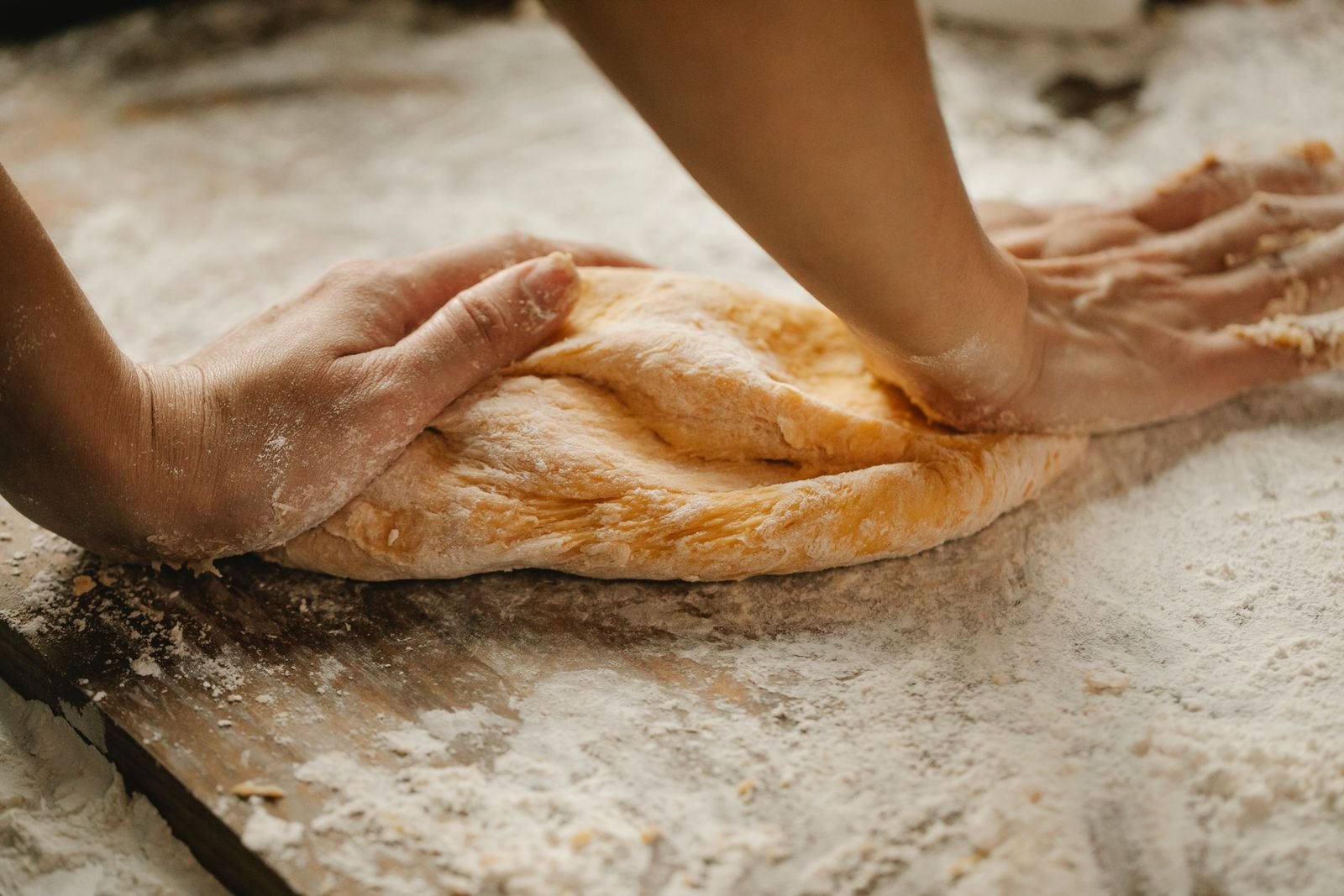
Kneading turns a shaggy mix of flour and water into smooth, stretchy dough. It builds gluten, the network that traps air and gives bread, pizza and cinnamon rolls their soft, chewy texture. You don’t need a mixer: here is how to knead dough by hand.
Watch: How to Knead Dough by Hand in 30 Seconds
In this article
- How to Knead Dough Step by Step
- How Long Should You Knead?
- Signs Your Dough Is Ready
- The Windowpane Test
- Common Kneading Mistakes
- A Helpful Trick: Rest the Dough
- Kneading by Hand vs Stand Mixer
- Different Doughs, Different Kneading
- How to Knead Dough: Quick Checklist
- Frequently Asked Questions
- Put Your Kneading Skills to Work
How to Knead Dough Step by Step
- Lightly flour your surface. Use only a little flour so the dough doesn’t get dry.
- Push. Press the dough away from you with the heel of your hand.
- Fold. Fold the stretched dough back over itself.
- Turn. Give the dough a quarter turn.
- Repeat. Keep pushing, folding and turning in a steady rhythm.
How Long Should You Knead?
Most doughs need about 8–12 minutes of kneading by hand. Richer doughs with butter, eggs and sugar, like cinnamon rolls, may take a little longer to become smooth.
Signs Your Dough Is Ready
- It looks smooth instead of rough and lumpy
- It feels soft, stretchy and slightly tacky, but not sticky
- It springs back slowly when you press it
The Windowpane Test
This is the best way to check your dough. Pinch off a small piece and gently stretch it between your fingers. If it stretches thin enough to let light through without tearing, like a windowpane, the gluten is well developed. If it tears quickly, knead for another 2–3 minutes and test again.
Common Kneading Mistakes
- Adding too much flour. Sticky dough becomes smoother as you knead. Too much extra flour makes bread dry and heavy.
- Stopping too soon. Under-kneaded dough tears easily and bakes up dense.
- Using cold ingredients. Warm dough is easier to knead and rises better.
A Helpful Trick: Rest the Dough
If your dough keeps springing back or feels tight, cover it and let it rest for 10 minutes. The gluten relaxes, and the dough becomes much easier to knead and shape.
Kneading by Hand vs Stand Mixer
| By hand | Stand mixer | |
|---|---|---|
| Time | 8–12 minutes | 5–8 minutes on low to medium speed |
| Control | You can feel the dough change | Less feel, more speed |
| Risk of over-kneading | Very low | Possible if left too long |
| Best for | Small batches and beginners | Large batches and very sticky doughs |
Both methods work well. Kneading by hand is a great way to learn how good dough should feel.
Different Doughs, Different Kneading
- Pizza dough: knead until smooth and stretchy so it can be shaped thin without tearing.
- Bread dough: knead well and use the windowpane test for a light, airy loaf.
- Cinnamon roll dough: enriched with butter, sugar and eggs, it starts sticky and becomes smooth and silky with patience.
- Quick breads and muffins: no kneading at all. Mix gently, or they become tough.
How to Knead Dough: Quick Checklist
- Start with a lightly floured surface and clean, dry hands.
- Push, fold and turn in a steady rhythm.
- Resist adding lots of extra flour.
- Rest the dough for 10 minutes if it feels tight.
- Knead for 8–12 minutes, until smooth and elastic.
- Do the windowpane test before the first rise.
With a little practice, kneading becomes relaxing, and your bread, pizza and rolls will be softer and lighter than ever.
Frequently Asked Questions
Can you over-knead dough by hand?
It is very difficult to over-knead by hand, because your arms will tire first. Over-kneading is more likely with a stand mixer.
Why is my dough so sticky?
Some doughs are naturally soft. Knead for a few minutes before adding more flour, and lightly oil your hands instead.
Do I need to knead pizza dough?
Yes. Kneading gives pizza dough the stretch it needs to be shaped thin without tearing.
Put Your Kneading Skills to Work
Try kneading by hand with our chicken tikka pizza or caramel cinnamon rolls.
More bread & dough basics
Learn the essentials for golden, crusty homemade bread.